“Righteous Among the Nations” Medal Presentation Ceremony, POLIN Museum, 5th December 2025
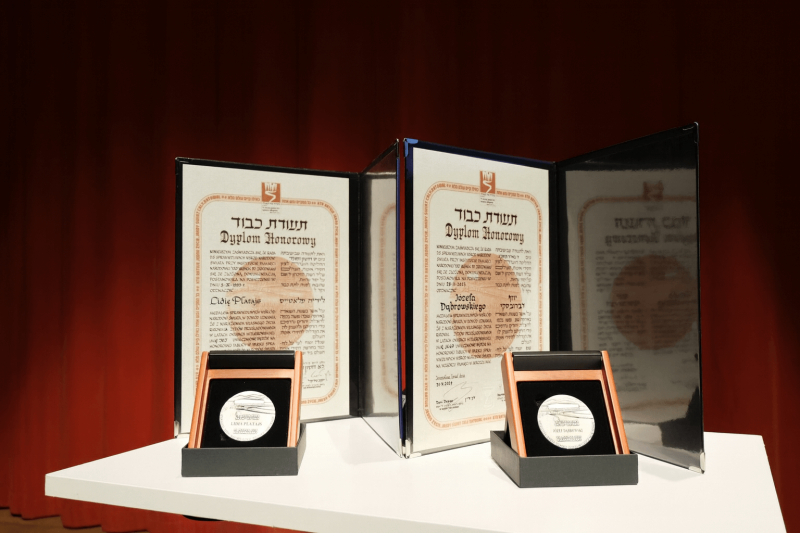
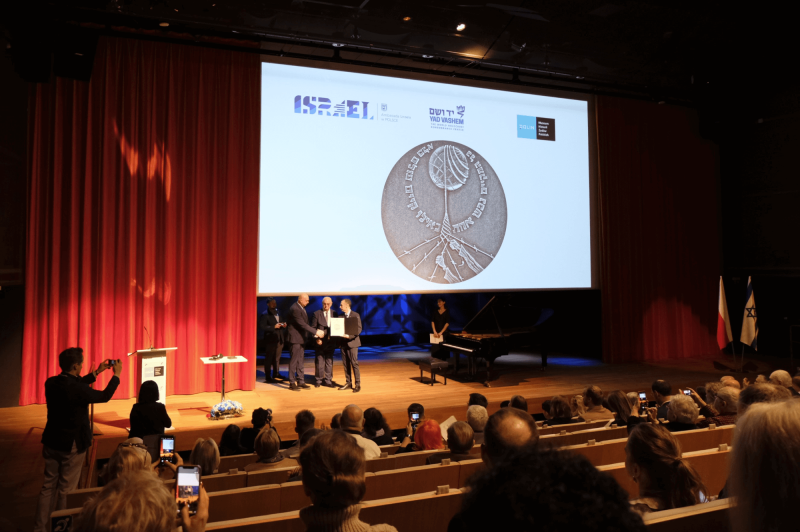
“By paying tribute to the Righteous today, we repeat the words of Marian Turski, ‘In the face of evil, one must not remain indifferent’. This is the best way to ensure that no one will ever again have to confront the dilemmas which they faced, often alone, standing against the murderous machinery of the Holocaust. Remembering them is not only an act of commemoration, it is a commitment. We are not responsible for what happened in the past, but we carry the obligation of memory - of what we do with that memory. […]
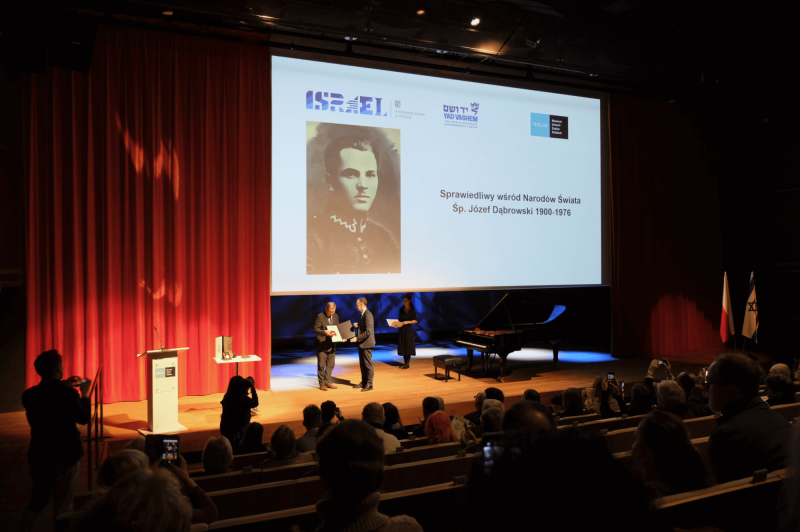
"In his last great speech at Auschwitz, Marian Turski said, ‘Do not be afraid’. I am proud that, today, we can participate in a ceremony, which honours those who had the courage to do good at the risk of their own lives and the lives of their loved ones”, said Łucja Koch, Deputy Director of the POLIN Museum, as she welcomed the participants of the ceremony in the Museum auditorium.
Since 1963, the title of Righteous Among the Nations has been awarded by the Yad Vashem Institute. It is the State of Israel's highest civilian honour , bestowed upon individuals from around the world who, at the risk of their own lives, provided selfless aid to Jewish men and women, who were persecuted by Nazi Germany during the Second World War.
To date, more than 28,000 people, from 51 countries, have received Righteous Among the Nations medal and certificate. That number includes 7,318 Polish men and women (as at January 2024).
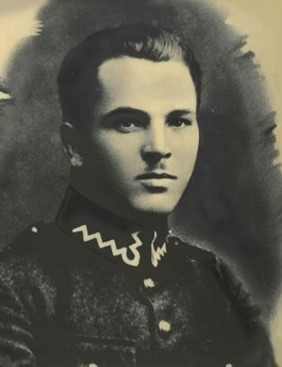
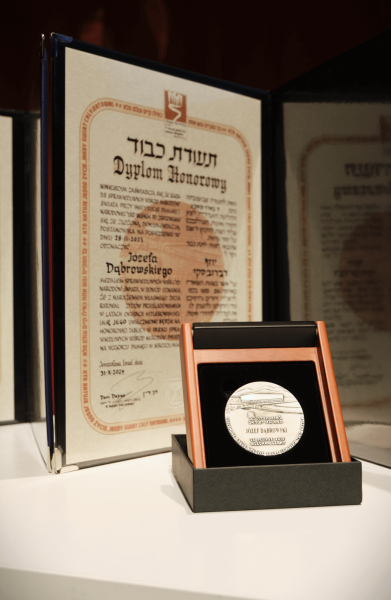
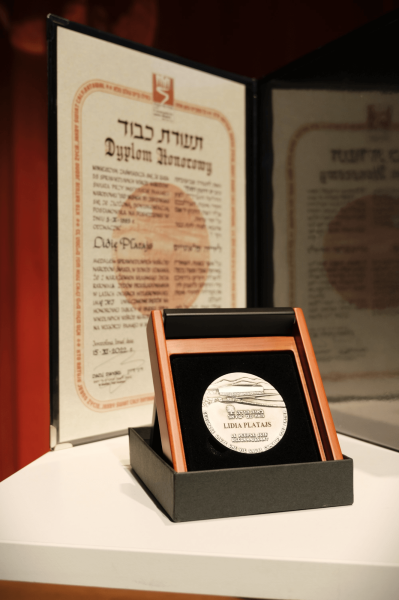
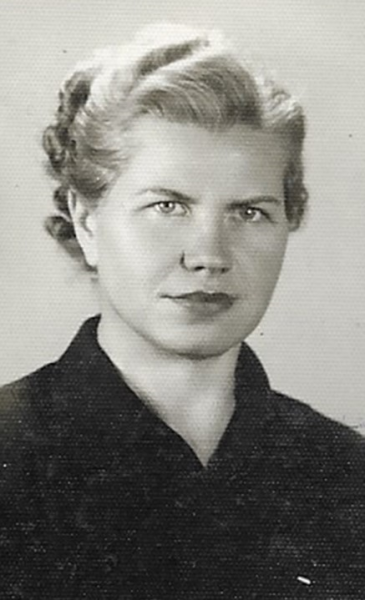
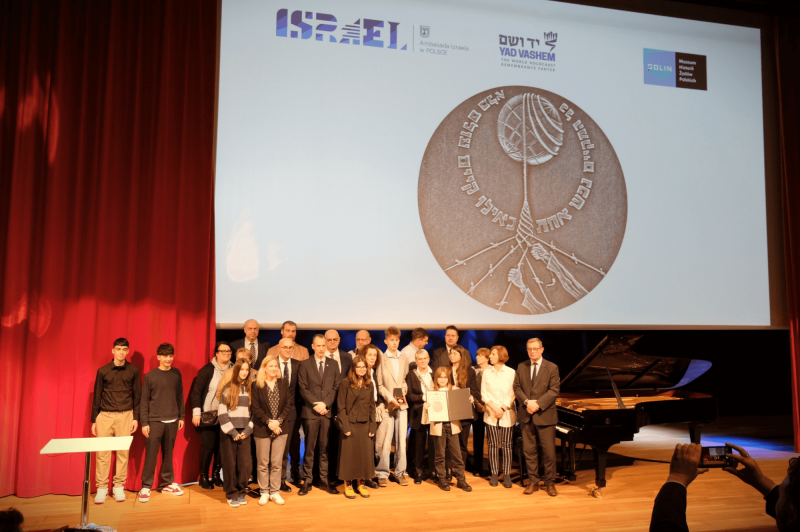
At the ceremony, held on 5th December 2025, two more individuals joined this distinguished group – Józef Dąbrowski (1900–1976) and Lidia Platajs (1908–1991).
The ceremony was, once again, held at the POLIN Museum of the History of Polish Jews which, since 2008, has been presenting the stories of Polish men and women who rescued Jews - as well as of those whom they helped- through its online knowledge portal - The Polish Righteous.
The families of the rescuers, who took part in the ceremony, were Grzegorz Dąbrowski, the grandson of Józef Dąbrowski, and Jerzy Platajs, the nephew of Lidia Platajs, together with his family. The medals and certificates were presented by the Deputy Ambassador of the State of Israel to Poland, Omer Chechek-Katz.
Michal Heller Dor, the daughter of Szymon Heller, who was rescued by Lidia Platajs, also spoke during the event.
Honouring the Righteous
"Grandfather Józef and Grandmother Marianna had three sons and lived in Marymont. […] In my eyes, Grandfather will always remain an exceptionally kind, good, and also modest person. […] Grandfather was a decent man. Why? Because I think that this adjective, as we understand it, speaks to a person’s goodness, but also to something more - to modesty. And these two qualities, as I remember my grandfather, always went together.”
Grzegorz Dąbrowski during the ceremony at the POLIN Museum.
During the German occupation, Józef Dąbrowski assisted his acquaintances, Moshe and Anna Gutmer who, in early 1943, had escaped from the Warsaw ghetto. Dąbrowski took them into his apartment in Warsaw, providing them with shelter and material support. In his postwar testimony, Moshe wrote that it was Józef who, by offering help, contributed, in greatest measure, to the fact that he and his wife had survived the German occupation.
In 2023, on the basis of this testimony, Yad Vashem recognised Józef Dąbrowski as Righteous Among the Nations.
The process of awarding the title to Lidia Platajs took much longer and began nearly forty years ago. For many years, Yad Vashem searched for her relatives in order to inform them of the distinction conferred in 1993 and to present them with the commemorative medal and certificate.
During the ceremony, Lidia’s nephew, Jerzy Platajs, said,
“Behind this medal lies the story of at least two people - a small boy, certainly terrified, whose father desperately sought to save him from the horrors of war, and a young woman, barely in her thirties, who decided to take the child into her home and risk her own life.
"It was mortally dangerous for both of them and, still, thanks to the courage and kindness of Lidia Platajs, Szymon Heller was rescued, survived the war and was able to begin a more or less normal life. More or less, because the past undoubtedly left him traumatised, a past easy and, sometimes, impossible, to forget.
"We are deeply moved by the presence at today’s ceremony of Mr. Szymon Heller’s daughter, his grandsons, and his granddaughter. We thank you for being here with us. Your presence is a testament to your remembrance of and respect for Lidia Platajs.”
Lidia Platajs helped eight-year-old Szymon Heller who, in 1942, arrived at her apartment, together with his father, Roman. Despite repeated danger and the need to change hiding places, Platajs cared for the boy until the end of the war, sheltering with him in the countryside in southern Poland.
After the war, she brought the child back to Warsaw and placed him under the care of the Jewish Committee. In the spring of 1949, Szymon Heller left for the newly-established State of Israel, where he settled, received an education and began a family.
During the ceremony, Szymon Heller’s daughter, Michal Heller Dor, spoke on his behalf:
“Lidia Platajs, supported by her mother, opened her home and her heart to a child - a child whom she protected from hunger, cold and fear; whom she taught to read, write and count; to whom she gave hope for the future. […]
Last month, we celebrated my father’s 90th birthday, when he was surrounded by his four children and twelve grandchildren. This celebration was possible also thanks to Lidia Platajs, who chose to help him back then. Her legacy lies in the fact that she did not abandon her humanity, allowing this child to survive and grow into adulthood.”
Read:
See more:
- Attitudes of Poles towards Jews during the Holocaust [thematic study] →
- The death penalty for aiding Jews in Occupied Poland [thematic study] →
- Poles and the Warsaw Ghetto Uprising [thematic study] →
- Zofia Kossak's Proclamation "Protest!” (1942) [thematic study] →
- Monograph: "This is my Fatherland” Władysław Bartoszewski and Zofia Lewinówna [thematic study] →
- Jews hiding on the "Aryan side" [thematic section] →
- Educational and Expert Materials Package: "In Hiding - Stories of Survivors and the Righteous” →
- Educational Film and Expert Discussion on Irena Sendler and Jadwiga Piotrowsk →
- Educational Film and Expert Discussion on Jan and Antonina Żabiński →
- Interviews from the POLIN Museum Oral History Collection [YouTube channel] →