German occupation reached Volyn in 1941.
“Since I had been imprisoned for communist activities in 1933-1935, I realized that, when the Germans came, I would be turned in by the Ukrainian nationalists and put before a firing squad. I decided to leave”- writes Tadeusz Grzesiak in his memories.
“I had a chance of survival because I was a blacksmith. It would have been easier if I was alone, rather than with Nechume and her year-and-a-half old child, and the burden of her nationality. Yet, as a person fighting against anti-Semitism, I believed it was my duty to rescue at least two people.”
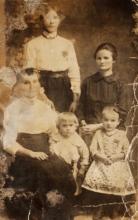
Nechume Szwarcblat and her daughter Wanda, who was born in 1939, were Grzesiak’s neighbours, and Nechume’sfather was a cantor in a synagogue. Tadeusz offered Nechume and Wanda his help by organising Polish documents for them. From then on, ‘Zofia’ was Tadeusz’s wife, and they remained this way until the end of their lives.
“It was a perfect marriage, a family of righteous people. I couldn’t be happier for having such a family”- says Wanda Lotter, the daughter.
In 1943 the Grzesiaks, together with other refugees fleeing from the Ukrainian Insurgent Army were transported to a labour camp in Austria, where they lived for the rest of the war. After the war, they spent 8 years in Piła, then moved to Lublin, where Tadeusz Grzesiak graduated in economics.
“Once, Mr Lotter, the director of the aggregate mine where my father worked, came to ask my mother for my hand. He brought a copy of the book ‘Zmierzch Izraela’, (Israel’s Twilight) My mother told me, ‘I am Jewish.’, which is how I learned the true history of my family.”
Wanda Lotter still lives in Lublin, while Tadeusz Grzesiak died in 1998, and Zofia Grzesiak in 2004.