Zofia Kossak Biography Released
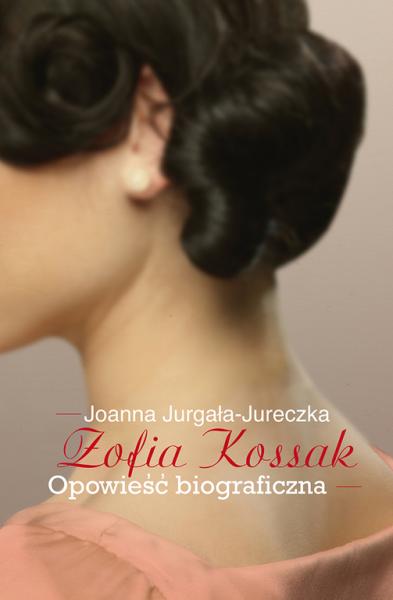
Zofia Kossak, primo votoSzczucka, secundo voto Szatkowska, was the daughter of Tadeusz Kossak, twin-brother of the painter of Wojciech Kossak. In accordance with family tradition, she studied painting at the School of Fine Arts in Warsaw, and then drawing at the Ecole des Beaux Arts in Geneva. However, she was not part of the bohemian artists’ scene. She became a respected and recognised writer. In 1936, she was awarded the Golden Wreath by the Polish Academy of Literature, the most important literary award of the pre-War period.
Zofia Kossak’s debut book was Pożoga (Conflagration)– a dramatic recollection of Wołyn during the times of the peasant and Bolshevik rebellions. Her works regarding the Śląsk region (Nieznany kraj – An Unknown Country), and for children and teenagers (Kłopoty Kacperka góreckiego skrzata – The Troubles of Kasper the Mountain Dwarf) brought her popularity. Her historical prose works are still popular to this day, among them being the trilogy Krzyżowcy (Crusaders), Król trędowaty (The Leprous King) and Bez oręża (Without Weapons) or her bookBłogosławiona wina (Blessed Guilt).
Even though, prior to the War, she had written critically about Jews, during the Nazi occupation she devoted herself to helping save them. She was motivated by her deep faith and by her empathy with those who were suffering.She authored the public appeal entitled Protest! in which, in the name of the Catholic organisation the Front for the Revival of Poland, she appealed to Poles to save Jews. Together with Wanda Krahelska-Filipowicz, in 1942 she established the Temporary Committee to Help Jews, which later became the Council to Aid Jews (Żegota). The price she paid for her underground activity was imprisonment in Auschwitz and in Pawiak prison. Following the fall of the Warsaw uprising in which she was a participant, she ended up in London and then spent many years in Cornwall where she ran a farm for many years. A dozen or so years later, she returned to Poland. In 1982, she was honoured with the title of Righteous Among the Nations.
Zofia Kossak’s portrait is presented to contemporary readers through letters, diaries and memorabilia.
Joanna Jurgała-Jureczka
Educated as a literary historian, she has authored books and articles mainly on the 20th century inter-war period and on the period of communist Poland. She has been a teacher, a journalist and curator of the Zofia Kossak Museum in Górki Wielkie.