Dyskusja o pomniku Sprawiedliwych w pobliżu Muzeum POLIN
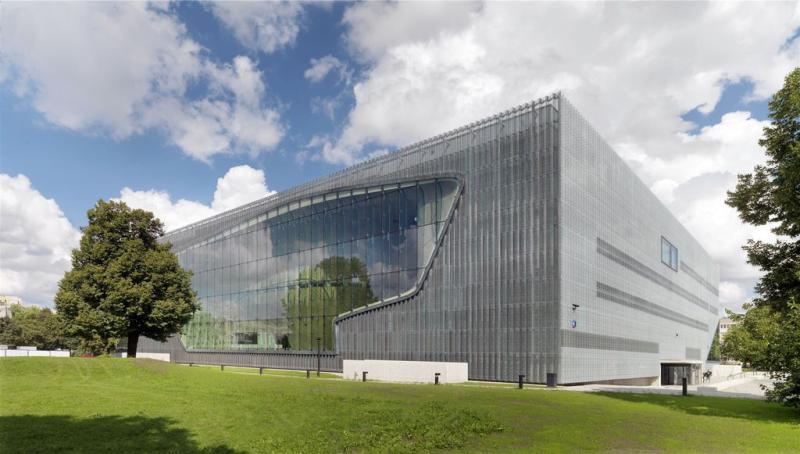
The initiative to put up the monument to the Righteous near the POLIN Museum emerged in spring 2013. The originator of that commemoration was Zygmunt Rolat, a Holocaust survivor, an outstanding benefactor of the Museum. His idea was supported by the President of the Republic of Poland, Bronisław Komorowski.
Public discussion on the selected location started with an article by Prof. Barbara Engelking who in April 2013, opposed in “Gazeta Wyborcza” the idea of erecting the monument to the Righteous on this spot, arguing that the area of the former Warsaw Ghetto should be exclusively devoted to the memory of the murdered Jews: “Locating the monument to the Righteous on the spot soaked with Jewish suffering may be perceived – contrary to the intentions of the originators – as an expression of a vanity and fear. And arrogance which demands ‘ours’ to be on top,” she wrote.
Soon, the community of academicians associated with the Centre for Studies on the Holocaust of the Polish Academy of Sciences, i.e., Barbara Engelking, Prof. Jan Grabowski and Prof. Jacek Leociak, among others, issued an open letter opposing the selected location of the Monument to the Polish Righteous. Several days later, representatives of the Jewish organizations, including the Chairman of the Jewish Religious Community, Piotr Kadlčik, came forward with a similar appeal.
At the same time, the idea of locating the monument near the Museum was supported by some of the Jewish intellectuals. Konstanty Gebert wrote, inter alia: “The area around the Monument to the Ghetto Heroes becomes a space of a symbolic interpretation of the occupational chapter of the history of Polish Jews […]. Not finding a place there to commemorate these heroes who – within the “Żegota” structures or out of them – rescued Jews would be a triumph of the national disrespect.” Also Prof. Adam Rotfeld expressed his support for the monument..
In autumn 2013, Zygmunt Rolat’s initiative became an official enterprise. The Committee for the Erection of the Monument to the Righteous was set up composed of, among others, almost 30 representatives of the Jewish community including Konstanty Gebert, Prof. Szewach Weiss and Rabbi Michael Schudrich.
The discussion flared up anew in spring 2014, mostly due to an open letter by Helena Datner, Bożena Keff and Elżbieta Janicka addressed to the Committee for the Erection of the Monument to the Righteous and published by “Krytyka Polityczna”: “Locating the Monument to the Righteous beside POLIN Museum of the History of Polish Jews means exorcising this space […], it also reduces the importance of the Museum, automatically placing it in relation to the message of the Monument to the Righteous. […] The Monument to the Righteous at the neighborhood of the Museum means presenting an exception as a rule. The Rescuers will overshadow, and in the dominating discourse, are already overshadowing those who denounced and thanks to whom the Righteous were losing their lives together with those they tried to rescue,” they wrote.
Also Prof. Jan Grabowski expressed his criticism over the monument, at that time: “Multiplying monuments, memorial plaques and other ceremonies will certainly not contribute to a serious reflection over the attitudes of Poles during the occupation. At most, it will ‘subjugate’ or ‘tame’ the topic, releasing in this way millions of Poles from the duty of asking fundamental although uncomfortable questions about their past. For what is the reason to permanently disturb ourselves when it is clear that all was fine?” Various opinions were also expressed at that time by, among others, Prof. Michał Głowiński, Andrzej Potocki, Piotr Zychowicz,Paula Sawicka, Michał Bilewicz, Dawid Wildsteinand Kinga Dunin.
In September 2014, the Foundation “Pamięć i przyszłość” (Memory and Future) established by Zygmunt Rolat called a competition for a design of commemorating the Righteous beside the Museum. The commemoration was titled “The Survivors for the Rescued”. 800,000 dollars were allotted for the implementation of the monument. Zygmunt Rolat became its principal sponsor.
At the beginning of this year, other voices protesting against Zygmunt Rolat’s initiative could be heard. “Gazeta Wyborcza” quoted Prof. Tomasz Gross’ statementfrom the conference “Memory and Responsibility” held at the University of Warsaw. He said: “The Righteous are in fact ‘the cursed soldiers’ who both against Germans and their compatriots saved not only Jews but also honor and the national dignity of the Poles during the war. A Jewish philanthropist who survived the Holocaust putting up at his own expense a monument of gratitude on that place, would not be obliged to place a plaque on it explaining the benefactor’s intentions with the following words: ‘To the Poles who – risking their own and their closest relatives’ death from the hands of the German occupant were selflessly providing aid to another human being, a Jew, acting in solitude and in spite of the hatred of the Polish community, saving in this way also the honor of the Polish Nation – grateful compatriots’. And it would be also desirable to add the signature: ‘the President, the Sejm and the Senate of the Republic of Poland’.”
Prof. Gross’ arguments were challenged, also in “Gazeta Wyborcza” by Konstanty Gebertand Adam Michnik. The latter one wrote: “Monuments to those who deserve respect and everlasting memory and who are to be patterns for next generations are erected everywhere. And they are located in the places where they will serve as commentaries to historical events.”
On 30 January 2015, a presidential minister, Maciej Klimczak assured that President Bronisław Komorowski fully supported the erection of the monument beside the POLIN Museum.
It has to be noted that “The Survivors to the Rescuers” is one of two initiatives aimed at commemorating Poles rescuing Jews during the German occupation. The first initiative was undertaken several years ago when the Committee for Commemorating Poles Rescuing Jews was founded which is headed by Prof. Jan Żaryn now. The monument is meant to be erected at Grzybowski Square in Warsaw and it will commemorate 10,000 rescuers. In March 2014, the competition for the monument design called by the Municipal Council of the City of Warsaw and the Council for Remembrance of Struggle and Martyrdom was adjudicated. The winning design has not been implemented yet. The idea of placing 10,000 names of the rescuers on the monument raises some doubts, however The Yad Vashem Institute has honored 6,500 Poles with the title Righteous Among the Nations. Critics of the idea of commemorating 10,000 names point to the necessity of an accurate verification of the people who were not awarded the title by the Yad Vashem but whose names will be placed on the monument.
The POLIN Museum, like all people who participated in the public debate, shares the opinion that the Righteous should be commemorated with due respect. Moreover, they deserve an important place in the history of Polish Jews. This is confirmed by the content of the Core Exhibition and current program activity including the online project “The Polish Righteous – Restoring Memory” devoted to the Poles rescuing Jews during the Holocaust, which has been implemented at the Museum since 2007. Within the project, histories of aid are collected and popularized.
Each year, the Museum observes the European Day of Remembrance of the Righteous and the anniversary of the establishment of the Council to Aid Jews “Żegota”. Within the project on the Righteous, the exhibition “Risking their Lives – the Poles Rescuing Jews during the Holocaust” was prepared in cooperation with the Ministry of Foreign Affairs and since 2014, it has been displayed abroad.