New Virtual Exhibition Marking 73rd Anniversary of Żegota

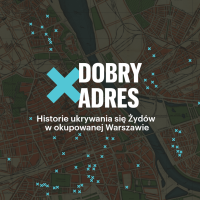
Elżbieta Ficowska, as a six-month old child, was rescued by members of Żegota. She was carried out of the ghetto in a box, into which was also placed a silver spoon bearing her name and date of birth. During the event, Ms Ficowska will donate a replica of her most cherished possession to the POLIN Museum collection. This will be followed by the presentation of our Museum's latest virtual exhibition, "A Good Address - Jews Hiding in Occupied Warsaw”, which will shows places, still in existence today, in which Jews hid themselves during World War II.
4th December, 10:30 am
Meeting with senior high school students (2.5 hours):
- Introduction to the story of the Council to Aid Jews Żegota (Robert Szuchta)
- Presentation of virtual exhibition "A Good Address - Jews in Hiding in Occupied Warsaw”
- Meeting with Elżbietą Ficowską (chaired by Monika Koszyńska)
- Laying of flowers at the Żegota monument”
Admission is free. Reservations are required and can be made online HERE.
The Council to Aid Jews Żegota
Established oon 4th December 1942, the Council was an agency of the Polish Government-in-Exile. It continued the work of the Provisional Committee to Aid Jews. In occupied Europe, Żegota was the only government institution which had as its aim the saving of Jews. Aid came mainly in the form of providing financial support, the organisation of hiding places and the provision of false documents. Several thousand people were helped this way, among them many children who were hidden with Polish families or were placed into orphanages.
Virtual Exhibition: A Good Address - Jews in Hiding in Occupied Warsaw
During the War, where did Jews hid in Warsaw? How many of these places still exist today? Perhaps we pass by them every day. Historians estimate that the number of Jews in hiding at various times in Warsaw could number as many as 27,000. We will never know exact how many hid and how many survived. Poles, who helped them, risked their own lives. The penalty, imposed by the Germans, for helping Jews was death. The virtual exhibition, which is dedicated to the rescuers and to those who were rescued, describes selected stories of rescue in Warsaw.