Remembering Jan Ponulak in Słupsk


“In 1946, the whole family came from Gródek Jagielloński to Słupsk and settled here permanently. [...] Here, on holidays, we often walked along this birch-lined path. [...] Here, we talked about everyday problems and worries. Our father shared his life experience with us, but he never spoke about the experience that is being honoured today in such a special way.
In his private life, he was a very courageous, very practical man. He taught us what is most inportant - to always show empathy towards others. That was his credo, and the credo of our family. I believe that these were the values which we carried with us as we embarked on our own lives”, said Jan Ponulak Jr, Jan Ponulak’s son, during the ceremony.
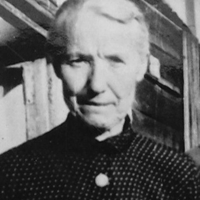
During World War II, Jan Ponulak lived with his family in Gródek Jagielloński, near Lwów. He helped a Jewish acquaintance, Rajzel Mandel, née Rajcfeld, and her relatives. After the Germans occupied the town, he took over running the mill which belonged to her and employed Jewish workers there, providing them with documents, which protected them from being sent to a forced labour camp. Among them was Rajzel’s brother, Ben Zion Rajcfeld.
In the summer of 1942, when the deportations of Jewish men and women to the Bełżec German Nazi extermination camp began, Jan Ponulak and his brother Michał prepared a hiding place in the mill for Rajzel Mandel’s family. He supplied those in hiding with food.
He placed Rajzel’s children, Mania and Zew, in a convent in Sądowa Wisznia. Later, another child, Basia (Batia), the daughter of Julia Rotman, who was also hiding in the mill, found refuge there too.
In December 1942, Ponulak helped Rajzel escape from the ghetto, so as to join her children. Thanks to his assistance, she and her immediate family survived the Holocaust.
Jan Ponulak Square w Słupsk
On 6th March 2019, Yad Vashem recognised Jan Ponulak as Righteous Among the Nations. The ceremony, during which the medal and certificate of honour were presented, took place on 16th June 2021 in Słupsk.
In June 2026, the Słupsk City Council decided to name a square, next to the Słupia River, in honour of Jan Ponulak. The square is a green recreational area adjoining the Park of Culture and Recreation.
“He was a person who embodied the values, which define humanity in every possible sense of the word. He exemplified the finest qualities of honour, respect, courage and faith in all that is beautiful, right and just”, said the reasoning behind the City Council’s decision.
The ceremony took place on 9th September 2026, during the 24th Days of Jewish Culture festival. It was attended by Jan Ponulak’s children, Teresa Zych and Jan Ponulak Jr., the Mayor of Słupsk, Krystyna Danilecka-Wojewódzka, the Director of the Słupsk Cultural Centre, Jolanta Krawczykiewicz, local residents and representatives of the POLIN Museum of the History of Polish Jews and the Forum for Dialogue.
“I am particularly happy today. I would like to thank Mayor Krystyna Danilecka-Wojewódzka and the City Council for passing the resolution to name this square after my father. I thank them for making this decision in difficult times. I want to emphasise this in particular: it was a courageous decision. [...]
If we gather here once a year during the Jewish Culture Days, this will be a wonderful place to demonstrate that the values my father stood for can continue to be upheld and respected by everyone. Especially today, when the world has become a very unpleasant place in this respect. There is too much aggression, too much focus on what is wrong, and too little effort to seek out what is good,” said Jan Ponulak Jr.
In a letter to those attending the ceremony, Professor Dariusz Stola, Director of the POLIN Museum, emphasised the importance of commemorating, in a public space, a man who selflessly helped persecuted Jewish men and women during World War II:
“The story of Jan Ponulak’s efforts to help others testifies to his sense of responsibility for the fate of his fellow human being. It also reminds us that Polish men and women adopted different attitudes towards Jews. The majority remained passive towards the Holocaust, many displayed prejudice towards Jews, some were openly hostile, and only a few offered them assistance.
"Those, who rescued Jews, operated in complete secrecy, fearing both the Germans and their neighbours. They risked their lives – the German occupation authorities imposed the death penalty for anyone leaving the ghetto and for anyone providing assistance to Jews”, recalled Professor Dariusz Stola, Director of the POLIN Museum, in his letter.
“‘Whoever saves a single life saves the world entire’, reads a statement from the Talmud, which is inscribed on the medal awarded to the Righteous Among the Nations. At the POLIN Museum, we believe that, faced with contemporary wars and conflicts, the stories of these extraordinary individuals – their courage, empathy and selfless sacrifice – can inspire us to work towards protecting human rights, promoting dialogue and searching for what unites us rather than what divides us.”
The stories of Jan Ponulak and Rajzel Mandel, who survived the Holocaust with his help, together with those of her relatives, are presented on the Polish Righteous portal. We encourage you to read this account of the rescue efforts, illustrated with archival photographs from family collections.